SOLAR STRUCTURE
Solar Panel Aluminium Profiles, Solar Mounting Structures Manufacturer Mumbai
High-Performance Solar Panel Aluminium Profiles in Mumbai
At Precision Aluminium Extrusion, based in the industrial hub of Mumbai, Maharashtra, we engineer the backbone of renewable energy. As India accelerates its shift toward green power, the demand for robust, weather-resistant, and lightweight mounting structures is higher than ever.
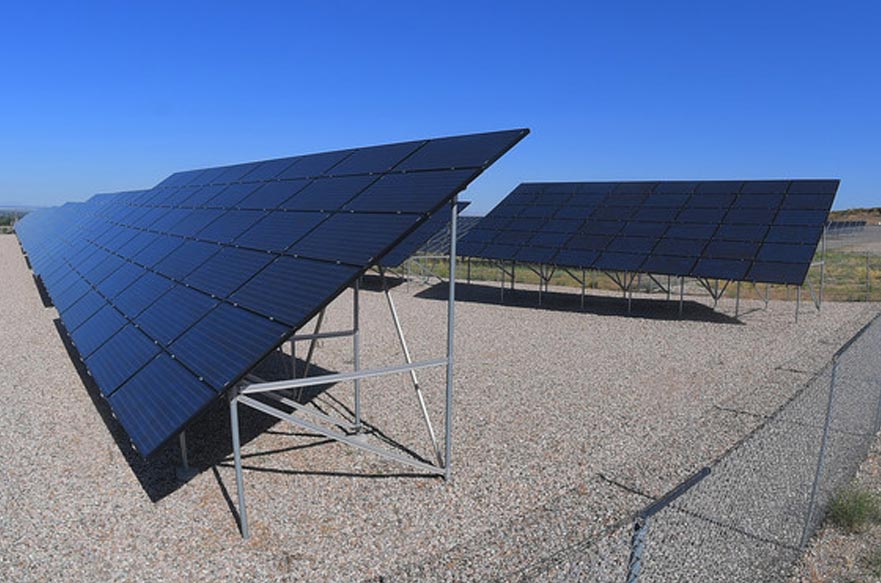
We specialize in manufacturing Solar Module Mounting Structures (MMS) that stand the test of time. From rooftop installations in urban Mumbai to large-scale solar parks across Maharashtra, our extruded aluminium profiles ensure your solar panels are secure, stable, and efficient for decades.
Why Aluminium for Solar Mounting?
Solar projects are long-term investments (25+ years). The mounting structure is the critical skeleton that holds the expensive PV modules in place. We utilize Aluminium Alloy 6063-T6, the industry gold standard, offering three non-negotiable benefits:
Corrosion Resistance: Unlike galvanized iron, aluminium naturally forms a protective oxide layer.1 Our additional anodizing (12-25 microns) ensures immunity to Mumbai’s humid coastal air and heavy monsoon rains.
Weight-to-Strength Ratio: Aluminium is 1/3rd the weight of steel but offers high tensile strength.2 This reduces the dead load on building roofs—crucial for industrial sheds and residential rooftop solar projects.3
Ease of Installation: Precision-extruded T-slots and hollow sections allow for rapid assembly using simple bolts and nuts, reducing on-site labor costs by up to 30%.
Technical Specifications: Solar Profiles
Our facility in the Mumbai Metropolitan Region (MMR) is equipped to produce profiles that meet global solar standards.
| Specification | Details |
| Material Grade | Aluminium Alloy AA 6063 (Al-Mg-Si) |
| Temper | T6 (Solution Heat Treated & Artificially Aged) |
| Tensile Strength | ≥ 215 MPa |
| Yield Strength | ≥ 170 MPa |
| Surface Finish | Mill Finish, Silver Anodized, or Black Anodized |
| Anodizing Thickness | 10 to 25 Microns (Customizable) |
| Standard Lengths | 4 Meters, 6 Meters, or Cut-to-Length (Tolerance ±0.5mm) |
| Wind Load Capacity | Designed to withstand wind speeds up to 170 km/h |
| Profile Types | Standard Rails, Mini Rails, C-Channels, Hollow Sections |
Our Solar Product Range
We are a “One-Stop Solution” for solar system integrators (EPCs) in India.
1. Solar Mounting Rails
The primary beam supporting the panels.
Standard Rail: 40x40mm, 60x40mm.
Heavy Duty Rail: Reinforced walls for wide spans in industrial sheds.
Feature: Integrated T-channels for easy insertion of T-bolts/nuts.
2. Solar Clamps (Mid & End Clamps)
Secure the PV modules to the rails without damaging the frame.
Universal Mid Clamps: Adjustable for 30mm to 50mm panel thickness.
End Clamps: Firmly grip the edge of the solar array.
Material: 100% Extruded Aluminium for galvanic compatibility.
3. Mini Rails (Short Rails)
A cost-effective solution for metal sheet roofs (trapezoidal/corrugated).
Length: Typically 300mm to 400mm.
Installation: Direct riveting to the metal roof, eliminating long rails and reducing cost by 40%.
4. Walkways & Cable Trays
Aluminium Walkways: Non-slip, lightweight platforms for maintenance access on rooftops.
Cable Trays: Corrosion-free management for DC cabling.
Manufacturing Excellence in Mumbai
Precision Aluminium Extrusion is strategically positioned to serve clients across India and globally.
Custom Die Development: Have a unique rail design? Our in-house CAD team and tool room can develop custom dies within 10-15 days.
Logistics Advantage: Located near Nhava Sheva Port (JNPT) and major transport corridors, we ensure rapid dispatch to Pune, Nashik, Gujarat, and South India.
Quality Control: Every batch undergoes Spectro analysis for chemical composition and Hardness Testing (Webster/Rockwell) before dispatch.
Frequently Asked Questions (FAQ)
Q: Do you supply solar profiles for coastal areas?
A: Yes. For coastal installations (like Alibag, Mumbai, or Kerala), we recommend a 20-micron Anodized Finish. This provides superior protection against salt mist corrosion compared to mill-finish or galvanized steel.
Q: What is the minimum order quantity (MOQ) for solar rails?
A: We support projects of all sizes. Our MOQ is typically 500 kg for standard profiles. For custom dies, we may require a slightly higher initial commitment.
Q: Can you cut the rails to specific project lengths?
A: Absolutely. We offer precise Cut-to-Length services. If your design requires 4.2-meter rails instead of standard 6-meter, we will cut them at the factory to minimize wastage at your site.
Q: Are your profiles compatible with all solar panels?
A: Yes, our mounting structures are universal. They are compatible with all major panel brands (framed and frameless) including Adani, Waaree, Vikram Solar, and REC.
Frequently Asked Questions (FAQ)
A: Yes. For coastal installations (like Alibag, Mumbai, or Kerala), we recommend a 20-micron Anodized Finish. This provides superior protection against salt mist corrosion compared to mill-finish or galvanized steel.
Lorem ipsum dolor sit amet, consectetur adipisicing elit. Optio, neque qui velit. Magni dolorum quidem ipsam eligendi, totam, facilis laudantium cum accusamus ullam voluptatibus commodi numquam, error, est. Ea, consequatur.
Lorem ipsum dolor sit amet, consectetur adipisicing elit. Optio, neque qui velit. Magni dolorum quidem ipsam eligendi, totam, facilis laudantium cum accusamus ullam voluptatibus commodi numquam, error, est. Ea, consequatur.
Solar Power modules generate electricity from sunlight, which can be fed into the mains electricity supply of a building or sold to the public electricity grid. Solar power make use of the natural energy of the sun to produce electricity. Specifically, solar cells capture certain wavelengths of solar radiation and convert them to electricity for our homes, calculators, and more.You can use solar power to run air conditioners, hot water heaters, and everything natural gas, electricity, or oil currently fuels. It’s the cheaper, safer, and more eco-friendly solution.